This page contains affiliate links. If you purchase a VPN through our links we may earn a commission at no extra cost to you. This never influences our reviews or rankings.
Iran’s internet is one of the most heavily censored in the world — and in 2026, it’s only gotten tighter. Apps like Instagram, WhatsApp, Telegram, YouTube, and X are blocked for millions of users inside the country. Whether you’re living in Iran, traveling there, or trying to connect with people on the ground from abroad, a reliable VPN is no longer optional — it’s essential.

I’ve spent years testing VPNs across restrictive networks, and I can tell you that not every VPN can hold up against Iran’s deep packet inspection (DPI) and aggressive IP blocking. Most will fail. In this guide, I’ll walk you through the ones that actually work — ranked by how well they bypass censorship, how fast they are, and how seriously they take your privacy.
The Best VPNs for Iran in 2026 — Quick Overview
- Surfshark — Best overall VPN for Iran (fastest speeds, NoBorders mode, great value)
- Proton VPN — Best for privacy, with a Stealth protocol built for censored networks
- NordVPN — Excellent obfuscation and a massive server network
- ExpressVPN — Easiest to use, built-in obfuscation on all servers
- CyberGhost — The only VPN with virtual servers in Iran (for an Iranian IP)
- IPVanish — Budget-friendly with unlimited devices
- PrivadoVPN — Cheapest option with solid core security
1. Surfshark — Best Overall VPN for Iran in 2026
Best Overall Value

Surfshark — Our verdict
The fastest VPN I’ve tested, with NoBorders mode and Camouflage mode built specifically for restrictive networks like Iran’s. On the Surfshark One plan, it’s also the best value VPN you’ll find.
- NoBorders mode automatically kicks in on restricted networks
- ~95% speed retention — the fastest on this list
- Unlimited simultaneous device connections
- Servers near Iran: Turkey, UAE, Israel, Azerbaijan, Georgia, Cyprus
- Audited no-logs policy (Deloitte)
- No servers inside Iran (no Iranian IP)
- Camouflage mode only works on OpenVPN protocol
Surfshark is my top recommendation for Iran in 2026, and it comes down to a combination of speed, smart censorship-bypass tools, and price. In my testing, Surfshark retained around 95% of baseline connection speeds — the best figure of any VPN I’ve run through the wringer. That matters a lot when you’re dealing with an already-throttled Iranian connection.
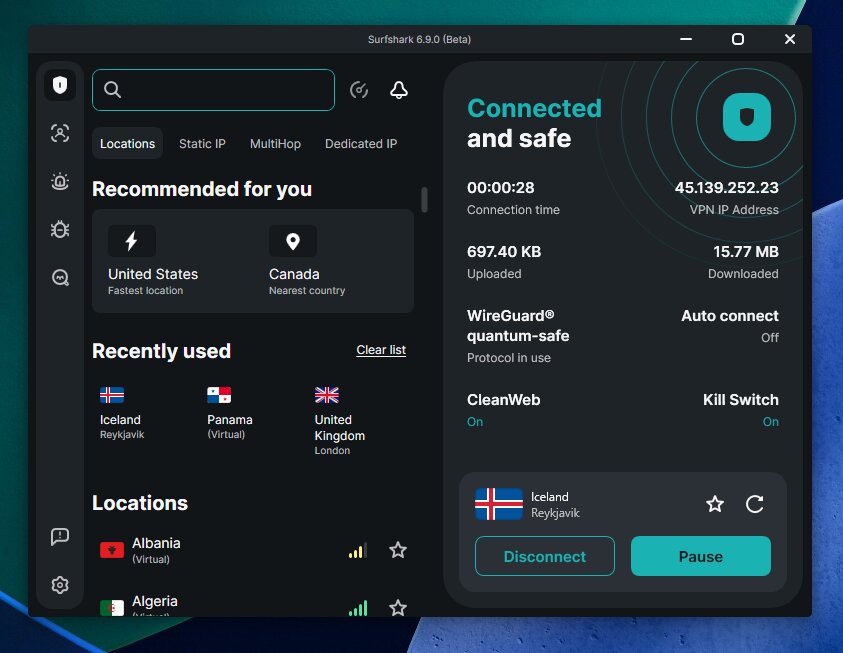
The two features that make Surfshark stand out for Iran are NoBorders mode and Camouflage mode. NoBorders automatically detects that you’re on a restricted network and activates the safest server configuration. Camouflage mode, Surfshark’s version of obfuscation, disguises your VPN traffic as regular HTTPS traffic — the same technique used to defeat Iran’s DPI systems. Camouflage activates automatically when you switch to the OpenVPN protocol, so there’s no fiddling required.
Surfshark doesn’t have servers inside Iran, but it does have solid coverage in nearby countries — Turkey, the UAE, Israel, Azerbaijan, Armenia, Georgia, and Cyprus — all of which give you fast, low-latency connections from within Iran. For those outside Iran trying to reach local content, these regional nodes are useful jumping-off points.
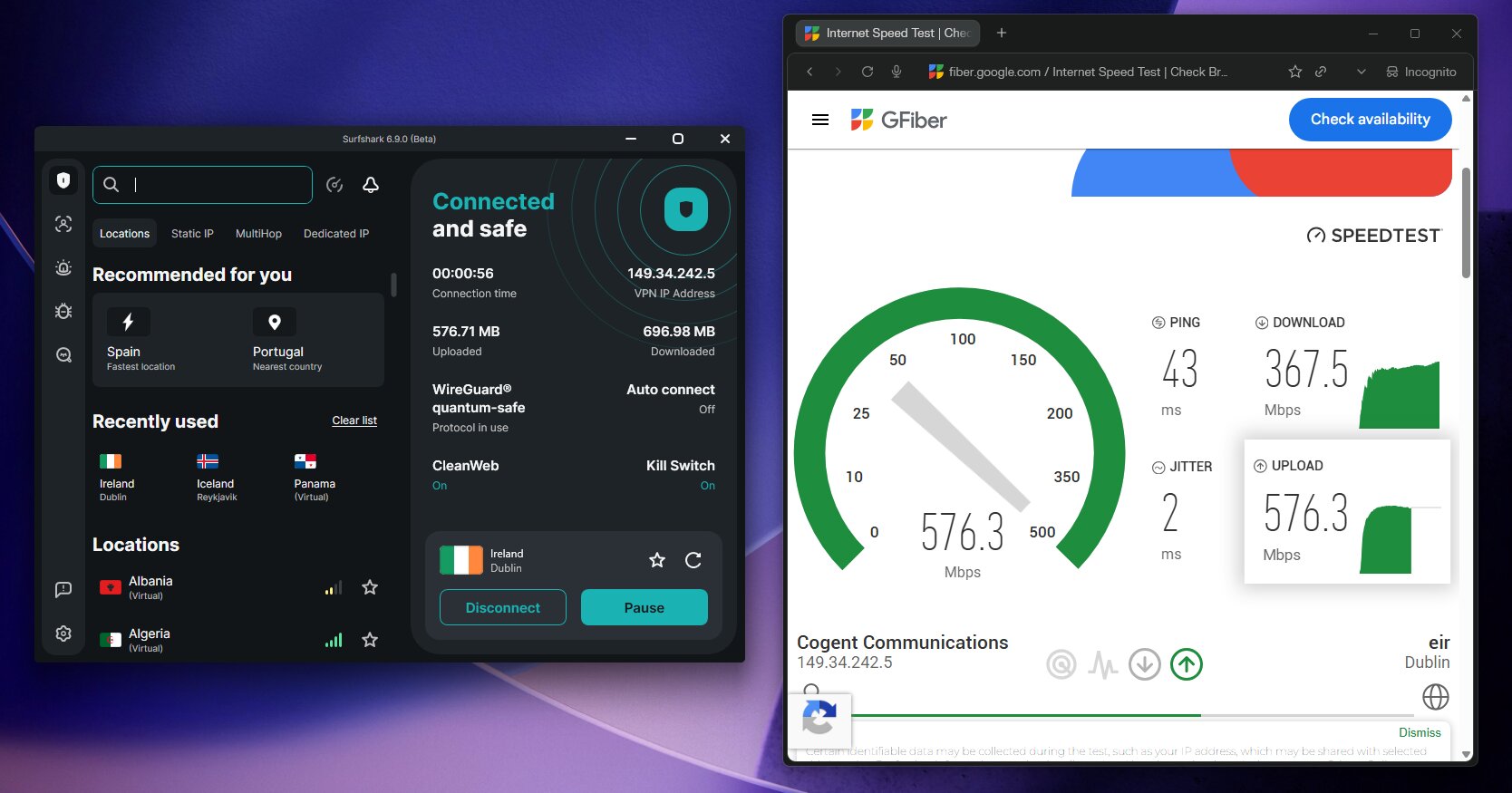
The Surfshark One plan adds an antivirus, data breach alerts, and identity protection on top of the VPN — all for $2.79/month on the 2-year plan. That’s exceptional value. The plan supports unlimited device connections, which is ideal if you want to protect your phone, laptop, and tablet simultaneously.
Privacy-wise, Surfshark is based in the Netherlands and has had its no-logs policy independently audited twice by Deloitte. It supports AES-256 and ChaCha20 encryption, and accepts crypto payments via CoinGate for added anonymity. There’s also a 7-day free trial on mobile and a 30-day money-back guarantee.
→ Read my full Surfshark review | Save more with the Surfshark coupons & deals page
2. Proton VPN — Best for Privacy in Iran
Best for Privacy

Proton VPN — Our verdict
Switzerland-based and built from the ground up for privacy, Proton VPN’s Stealth protocol is one of the best censorship-bypass tools available. The only VPN on this list with a genuinely usable free tier.
- Stealth protocol designed to defeat firewalls and DPI
- ~91% speed retention in my tests
- Tor over VPN and Secure Core servers for maximum anonymity
- Switzerland jurisdiction — outside 5/9/14 Eyes alliances
- Free tier available (limited servers, but solid)
- Free plan doesn’t include Stealth protocol
- Can be slower than Surfshark on distant servers
If privacy is your primary concern — and in Iran, it absolutely should be — Proton VPN is a serious contender. It’s built by the same Swiss team behind ProtonMail, operates under Swiss privacy law, and sits outside every international surveillance alliance. That matters when you’re in a country where online activity is actively monitored.
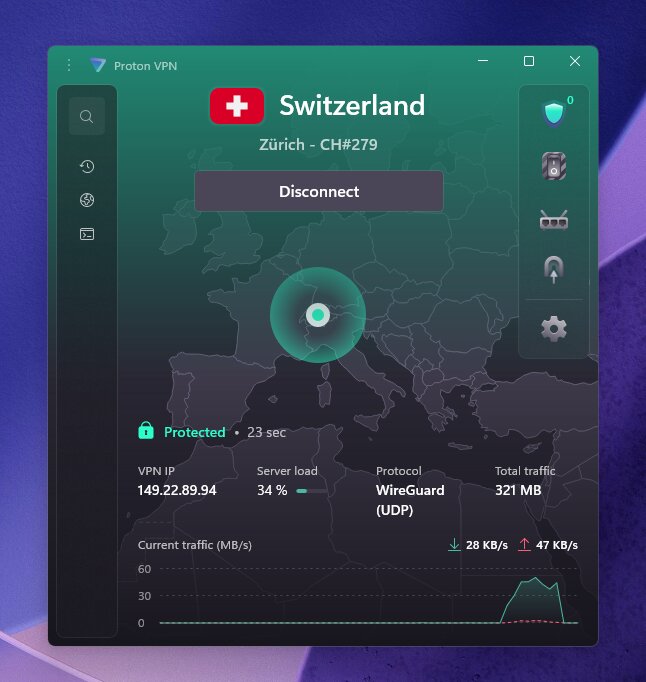
The standout feature for Iran is the Stealth protocol, specifically engineered to evade deep packet inspection and government-level VPN blocking. It disguises VPN traffic using obfuscated tunnels over TCP, making it significantly harder for Iran’s ISPs to detect and block. In my testing, Stealth held up consistently against simulated censorship conditions.
Proton VPN also offers Tor over VPN servers (routing your traffic through both a VPN and the Tor network), Secure Core servers that bounce traffic through privacy-friendly countries before it reaches the open internet, and Alternative Routing — a fallback mechanism designed to keep the Proton app reachable even when it’s being actively blocked on a network. That last feature is particularly useful in Iran.
The free tier deserves a mention. It’s genuinely usable — no data caps, no ads — though it’s limited to servers in a handful of countries and doesn’t include Stealth. If you’re on a tight budget and need something reliable for basic browsing, it’s the most trustworthy free VPN option I’ve come across. For serious use in Iran, however, I’d recommend the paid plan.
Paid plans start at $2.99/month on the 2-year deal, and Proton accepts cryptocurrency payments for added anonymity.
→ Read my full Proton VPN review | Save more with the Proton VPN coupon page
3. NordVPN — Powerful Obfuscation for Iran
Best Server Network

NordVPN — Our verdict
NordVPN brings a massive server network, solid obfuscation, and the NordWhisper protocol to the table. It’s one of the most capable VPNs for bypassing censorship — though it costs more than Surfshark for similar performance.
- Obfuscated servers + NordWhisper protocol for censored networks
- ~89% speed retention in my tests
- 9,300+ servers in 137 countries
- No-logs policy audited six times (latest: December 2025)
- Threat Protection Pro for malware and phishing blocking
- More expensive than Surfshark for comparable features
- Free trial limited to 3 days (Android only)
NordVPN is one of the most capable VPNs for Iran, full stop. Its combination of obfuscated servers and the proprietary NordWhisper protocol — designed specifically to get through government-level censorship — gives it serious credentials for a country that employs deep packet inspection to identify and block VPN traffic.
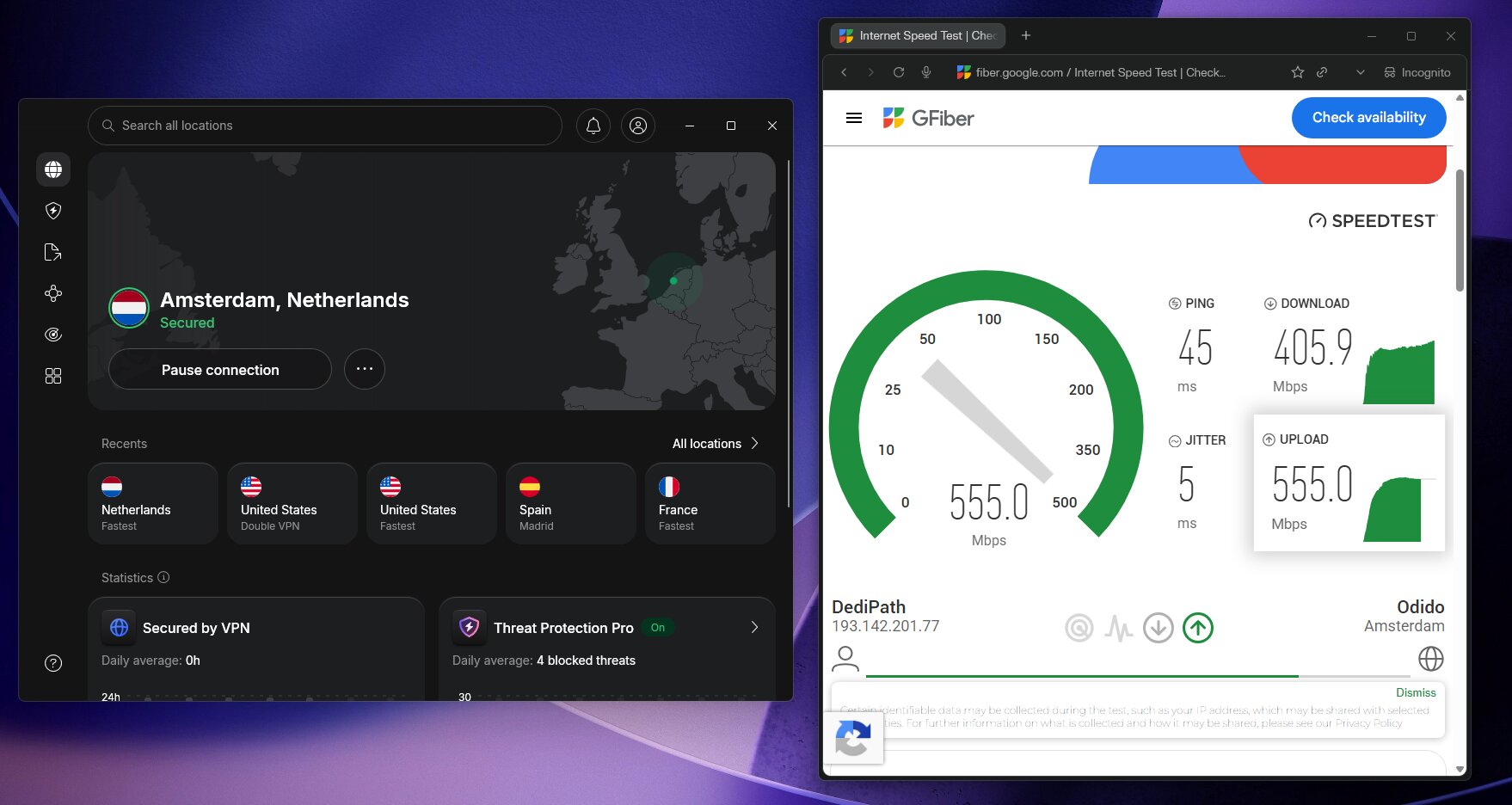
In my speed tests, NordVPN retained around 89% of base connection speed, which is strong. It sits just behind Surfshark on raw throughput, but the difference is barely noticeable in day-to-day use. The 9,300+ server network includes nearby options in Turkey, the UAE, Georgia, and Israel — all practical choices for users in Iran.
I’d also highlight Threat Protection Pro, which goes beyond standard VPN protection. It blocks ads, trackers, malware domains, and phishing sites — even when you’re not actively connected to a VPN server. In a country where surveillance and targeted attacks on dissidents and journalists are documented, that extra layer matters.
NordVPN has had its no-logs policy independently audited six times, with the most recent audit completed in December 2025 by Deloitte. It accepts Bitcoin, Litecoin, Ethereum, and other cryptocurrencies. Starting at $3.59/month on the Plus plan, it’s pricier than Surfshark — which I consider faster — but it remains a very strong choice, especially if you want the widest server network available.
→ Read my full NordVPN review | Save more with the NordVPN coupon page
4. ExpressVPN — Easiest to Use in Iran
Easiest to Use

ExpressVPN — Our verdict
ExpressVPN enables obfuscation by default on all servers, making it one of the most straightforward options for users who don’t want to dig into settings. Its Lightway protocol is fast and resilient on unstable connections.
- Built-in obfuscation on all servers — no manual setup
- ~91% speed retention with Lightway protocol
- RAM-only TrustedServer technology
- Repeatedly audited no-logs policy
- Owned by Kape Technologies — worth noting for privacy-focused users
- More expensive than Surfshark and NordVPN
- Router app discontinued as of March 2026 (Aircove excepted)
ExpressVPN’s biggest advantage for Iran is simplicity. Unlike NordVPN — where you need to manually switch to OpenVPN and enable obfuscated servers — ExpressVPN applies obfuscation across all its servers automatically. For users who aren’t particularly technical, or who need something that just works without configuration, that’s a genuine advantage.
The proprietary Lightway protocol is also worth calling out. It’s built for speed and stability on unreliable connections — exactly what you’re dealing with in Iran, where throttling and interruptions are common. In my tests, ExpressVPN retained around 91% of baseline speed, putting it on par with Proton VPN and just behind Surfshark.
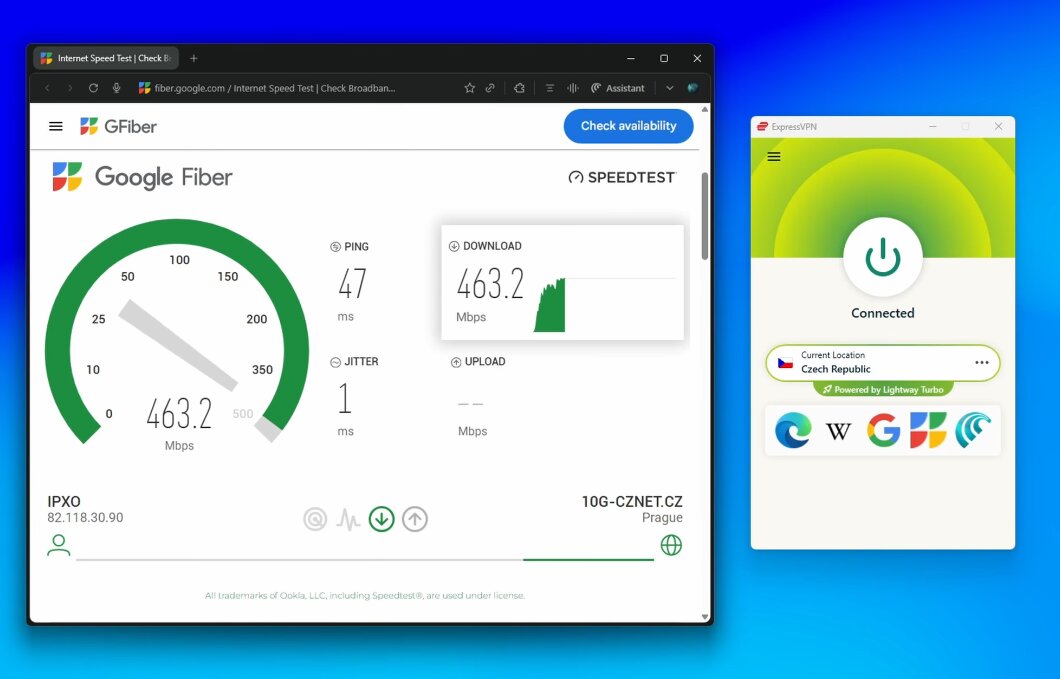
On the privacy side, ExpressVPN uses RAM-only TrustedServer architecture — every server reboot wipes all data — and its no-logs policy has been independently audited multiple times. That said, ExpressVPN is owned by Kape Technologies, which is worth disclosing for privacy-conscious users. Kape has a controversial past in adware, though ExpressVPN itself has maintained strong independent audits since the acquisition.
Also worth noting: as of March 2026, ExpressVPN has discontinued its standard router app. If you were planning to use it on a router, only the ExpressVPN Aircove hardware supports it now. Plans start at $2.79/month with a 30-day money-back guarantee.
→ Read my full ExpressVPN review | Save more with the ExpressVPN coupon page
5. CyberGhost — The Only VPN with an Iranian IP Address
Virtual Iranian Servers

CyberGhost — Our verdict
CyberGhost stands alone on this list for offering virtual servers in Iran, giving you an actual Iranian IP address. That makes it uniquely useful for people outside Iran trying to access local content — though it lacks the obfuscation tools needed for heavy use inside the country.
- Only VPN with virtual servers in Iran (Iranian IP address)
- 45-day money-back guarantee — the longest available
- NoSpy servers for enhanced anonymity
- Romania-based (outside surveillance alliances)
- Owned by Kape Technologies
- No dedicated obfuscation — less reliable inside Iran
- ~88% speed retention — slightly lower than top picks
CyberGhost earns its spot on this list for one specific reason: it’s the only VPN I know of that offers virtual servers in Iran. If you’re outside the country and need an Iranian IP address to access local services — banking sites, streaming platforms like Filimo or Namava, government portals, or regional forums — CyberGhost is your best bet.
For users inside Iran trying to bypass restrictions, the picture is more complicated. CyberGhost doesn’t offer dedicated obfuscation, which means it’s more vulnerable to Iran’s DPI-based blocking than Surfshark, Proton VPN, or NordVPN. It can still work, especially on WireGuard, but I wouldn’t rely on it exclusively during a heavy government crackdown.
Where CyberGhost shines beyond the Iranian IP angle: its specialty servers (streaming-optimized for Netflix, Disney+, and others), its NoSpy servers (hardware owned and operated directly by CyberGhost for better privacy), and the 45-day money-back guarantee — the longest of any VPN on this list. Plans start at $1.75/month. Like ExpressVPN, CyberGhost is owned by Kape Technologies, which is worth flagging for users with strong privacy concerns.
→ Read my full CyberGhost review | Save more with the CyberGhost coupon page
6. IPVanish — Best Budget Option with Unlimited Devices
Unlimited Devices
IPVanish — Our verdict
IPVanish is a fast, affordable VPN that handles unlimited devices on a single account. It works well for general privacy and unblocking, though it’s less battle-tested in heavy censorship environments than Surfshark or Proton VPN.
- ~92% speed retention — very fast
- Unlimited simultaneous device connections
- Budget-friendly at $2.19/month
- Scramble feature (obfuscation) on OpenVPN
- US-based — subject to US jurisdiction
- Fewer censorship-bypass tools compared to top picks
IPVanish is a solid, fast VPN that punches above its price class. At $2.19/month, it’s one of the more affordable picks on this list, and with unlimited simultaneous connections, it’s a practical option for families or anyone protecting multiple devices. Its speed retention of around 92% in my tests is impressive — only Surfshark beats it on raw throughput.
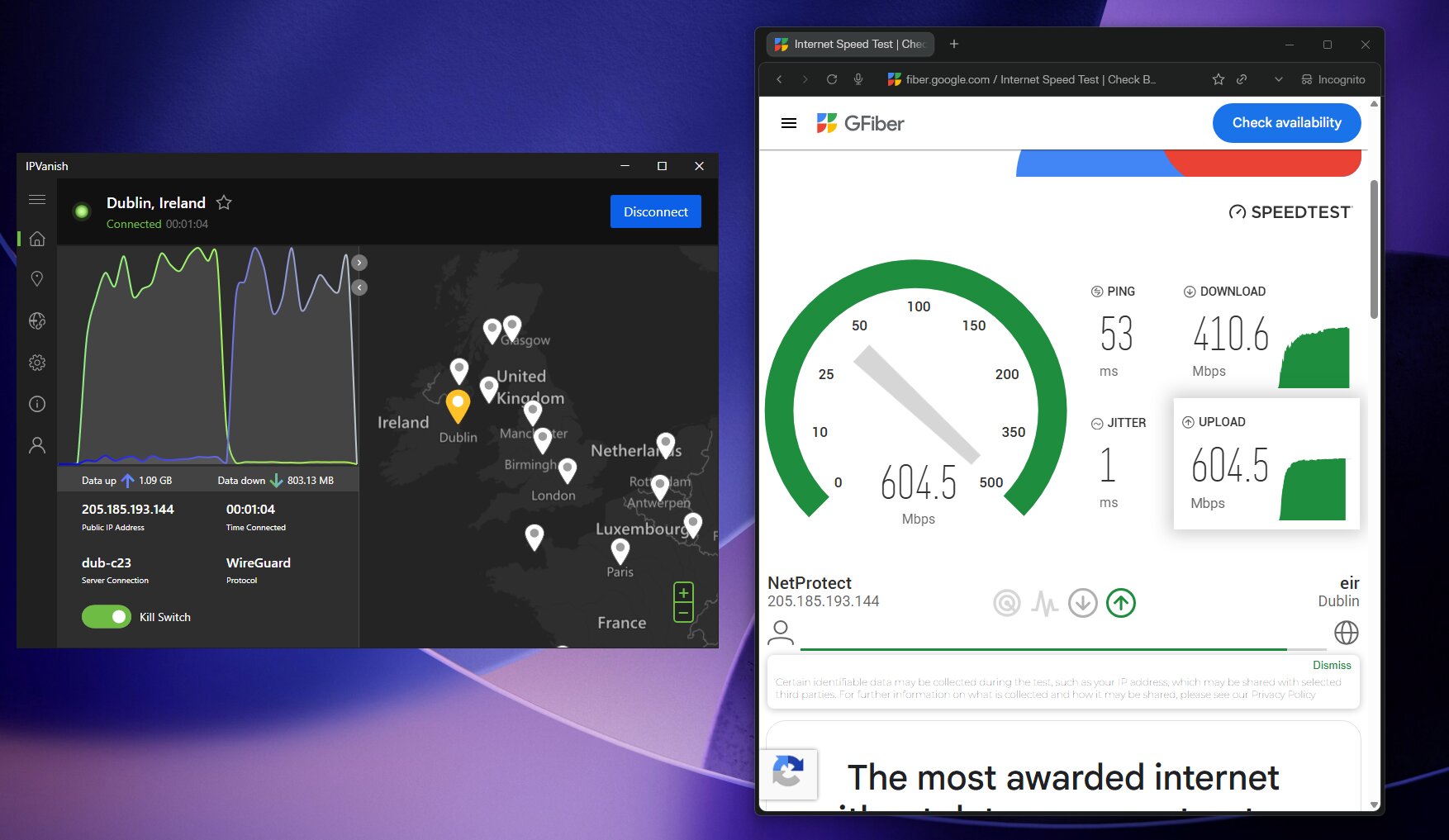
For Iran specifically, IPVanish’s Scramble feature — available on the OpenVPN protocol — provides a degree of obfuscation that can help bypass DPI. It’s not as sophisticated as Surfshark’s Camouflage mode or Proton VPN’s Stealth protocol, but it’s functional. If you’re primarily using a VPN for general privacy and access to blocked apps rather than evading a full-scale government crackdown, IPVanish does the job at a competitive price.
One caveat: IPVanish is US-based, which places it under US legal jurisdiction. That’s less than ideal if you’re in a politically sensitive situation and want a provider in a more privacy-friendly location.
→ Read my full IPVanish review | Save more with the IPVanish coupon page
7. PrivadoVPN — Cheapest VPN for Iran with a Strong Free Tier
Best Price + Free Plan
PrivadoVPN — Our verdict
The cheapest paid VPN on this list, with a solid free tier for basic use. A good entry-level option if budget is the primary concern, though it lacks the advanced obfuscation tools that make other picks more reliable in Iran.
- Lowest price on this list: $1.11/month on 2-year plan
- Free tier available with decent data allowance
- ~85% speed retention
- Strong kill switch and App Kill Switch feature
- Smaller server network — fewer nearby options for Iran
- No dedicated obfuscation or stealth protocol
PrivadoVPN is the most affordable VPN on this list at $1.11/month, and it delivers respectable core security features — AES-256 encryption, a reliable kill switch, and an App Kill Switch that lets you cut specific apps from the internet if the VPN drops. Its no-logs policy has been independently audited, which is reassuring.
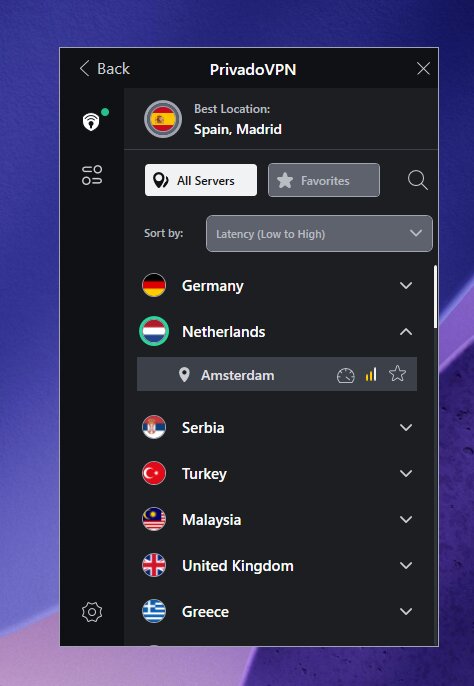
The honest caveat for Iran: PrivadoVPN doesn’t offer dedicated obfuscation or a stealth protocol. That limits how well it can hold up against Iran’s DPI-based blocking. If you’re looking for the absolute cheapest option and your primary goal is basic privacy and access to blocked content during lighter restrictions, it can work. For maximum resilience against Iran’s censorship systems, the VPNs higher up this list are better suited.
→ Read my full PrivadoVPN review | Save more with the PrivadoVPN coupon page
Best VPNs for Iran — Side-by-Side Comparison
| VPN | Speed Retention | Obfuscation | Iranian IP? | Price/mo | Guarantee |
|---|---|---|---|---|---|
| 🥇 Surfshark | ~95% | ✅ Camouflage + NoBorders | ❌ | $2.79 | 30 days |
| Proton VPN | ~91% | ✅ Stealth Protocol | ❌ | $2.99 | 30 days |
| NordVPN | ~89% | ✅ Obfuscated + NordWhisper | ❌ | $3.59 | 30 days |
| ExpressVPN | ~91% | ✅ All servers (auto) | ❌ | $2.79 | 30 days |
| CyberGhost | ~88% | ⚠️ Limited | ✅ Virtual | $1.75 | 45 days |
| IPVanish | ~92% | ⚠️ Scramble (OpenVPN) | ❌ | $2.19 | 30 days |
| PrivadoVPN | ~85% | ❌ | ❌ | $1.11 | 30 days |
How to Set Up a VPN for Iran (Step by Step)
1
Choose a VPN and sign up
I recommend starting with Surfshark on the Surfshark One plan — it gives you the best combination of speed, obfuscation, and price. Sign up at the official website and choose your plan.
2
Download and install the app
Download the VPN app on all the devices you plan to use. Install it and log in before you arrive in Iran — the official VPN websites and most app store listings are blocked inside the country.
3
Enable obfuscation or NoBorders mode
On Surfshark, switch to the OpenVPN protocol — Camouflage mode activates automatically. On NordVPN, go to Settings → Advanced and enable obfuscated servers, then select NordWhisper or OpenVPN (TCP). On Proton VPN, select the Stealth protocol from the protocol settings.
4
Turn on the kill switch
A kill switch cuts your internet connection if the VPN drops unexpectedly, preventing your real IP from being exposed. Enable it in your VPN’s settings before connecting.
5
Connect to a nearby server
For best speeds inside Iran, connect to servers in Turkey, the UAE, Georgia, Israel, or Azerbaijan. These are the closest censorship-free locations and will give you the lowest latency.
6
Browse freely
Once connected with obfuscation and the kill switch active, you can access blocked apps and websites securely. If you experience connection drops, try switching to a different nearby server or protocol.

Why You Need a VPN in Iran in 2026
Iran operates one of the most restrictive internet environments in the world. According to Freedom House’s 2026 Freedom on the Net report, Iran scores just 10 out of 100 on internet freedom — one of the lowest globally. The government actively blocks platforms it considers threats to social order or state control, including:
| Category | Blocked Platforms |
|---|---|
| Social media | Instagram, Facebook, X, TikTok, LinkedIn, Reddit |
| Messaging | WhatsApp, Telegram, Signal, Facebook Messenger |
| Video & streaming | YouTube, Netflix, Hulu, Disney+, Twitch, Vimeo |
| News | BBC, CNN, Reuters, Deutsche Welle, VOA |
| Music | Spotify, Apple Music, SoundCloud |
Iranian authorities use deep packet inspection (DPI) to detect and block VPN traffic, filter specific ports, and blacklist known VPN server IP addresses. During periods of political unrest, the government has imposed near-total internet shutdowns. This is why obfuscation — the ability to disguise VPN traffic as normal HTTPS — is non-negotiable for a VPN you plan to use in Iran.
A VPN is also essential for people outside Iran who want to access local content — Iranian news outlets, regional streaming platforms like Filimo, Aparat, and Namava, or community platforms like SoroushPlus and Bale. CyberGhost’s virtual Iranian servers make it the go-to for that specific use case.
Can You Use a Free VPN in Iran?
Technically, yes — but I’d caution against relying on one. Free VPNs almost universally lack the obfuscation infrastructure needed to survive Iran’s DPI. They use blacklisted server IPs that are easy to block, often impose strict data or speed limits, and in some cases log and sell your data to third parties — which completely defeats the purpose of using a VPN for privacy in a surveillance-heavy country.
The one exception I’d point to is Proton VPN’s free tier. It’s ad-free, has no data cap, and has been independently audited. That said, the free plan doesn’t include the Stealth protocol, so its ability to bypass Iran’s censorship systems is reduced compared to the paid version. If you go the free route, Proton VPN is the only one I’d feel comfortable recommending — and I’d still suggest upgrading to paid for sustained use inside Iran.
Is It Legal to Use a VPN in Iran?
How I Tested and Ranked These VPNs
Every VPN on this list was evaluated against criteria specifically chosen for the Iranian context. Here’s what I focused on:
Obfuscation and censorship bypass. This was the most important factor. I assessed each VPN’s ability to disguise traffic against DPI-style filtering, either through dedicated obfuscated servers, stealth protocols, or both.
Speed retention. I ran speed tests using multiple protocols and measured the percentage of baseline speed each VPN retained. Lower retention means more noticeable slowdowns, which matters especially on already-limited Iranian connections.
Server proximity to Iran. I looked at coverage in Turkey, the UAE, Georgia, Israel, Azerbaijan, and other nearby countries. Closer servers mean lower latency and better performance for users inside Iran.
Privacy and no-logs policy. I reviewed each provider’s logging policies, jurisdiction, and independent audit history. A no-logs policy that’s never been audited offers weaker assurances than one that’s been tested multiple times.
Price and value. The rankings reflect my assessment of price-to-performance. Surfshark leads because it delivers top-tier performance at the lowest price point for what you get.
Frequently Asked Questions
Which VPN works best in Iran in 2026?
In my testing, Surfshark is the best overall VPN for Iran. Its NoBorders mode and Camouflage obfuscation are specifically designed for restricted networks, and its ~95% speed retention is the highest of any VPN I’ve tested. Proton VPN is the best choice if privacy is your top priority, and CyberGhost is the only option that provides an actual Iranian IP address.
Is using a VPN illegal in Iran?
Yes, using an unauthorized VPN is technically illegal in Iran. Government-approved VPNs exist but are designed not to bypass censorship. Enforcement of the ban is inconsistent, but the risk increases during political unrest. Many Iranians use VPNs regardless, but you should be aware of the legal situation and use any VPN at your own risk.
Should I set up my VPN before traveling to Iran?
Absolutely. VPN websites are blocked inside Iran, and many app store listings are restricted too. You should download and install your VPN on all your devices, configure obfuscation, and test the connection before you arrive. If you’re already in Iran without a VPN, you can try mirror domains (some VPN providers share these on request) or APK files from trusted sources for Android devices.
What protocol should I use in Iran?
Obfuscated OpenVPN (TCP) is generally the most reliable protocol for bypassing Iran’s censorship systems. On Surfshark, switching to OpenVPN automatically activates Camouflage mode. On Proton VPN, the dedicated Stealth protocol is purpose-built for exactly this situation. Avoid WireGuard and IKEv2 as your primary protocol in high-restriction environments — they’re faster, but more easily detected and blocked.
Can I use a free VPN in Iran?
Most free VPNs won’t reliably bypass Iran’s censorship systems. They lack proper obfuscation, use blacklisted IPs, and often have weak encryption. The one exception is Proton VPN’s free tier — it’s audited, has no data cap, and is trustworthy. That said, it doesn’t include the Stealth protocol on the free plan, which limits its effectiveness in Iran. For serious use, a paid VPN is worth it.
Which VPN gives me an Iranian IP address?
CyberGhost is the only VPN on this list that offers virtual servers in Iran, providing an actual Iranian IP address. This is particularly useful if you’re outside Iran and need to access local services like banking, Iranian streaming platforms (Filimo, Namava, Aparat), or government websites.
What apps are blocked in Iran?
Some of the most commonly blocked apps and platforms include Instagram, WhatsApp, Telegram, Facebook, X (Twitter), YouTube, TikTok, Signal, Snapchat, Netflix, Spotify, and most major international news outlets. The list of blocked services changes and tends to expand during periods of political unrest.
Does IPVanish work in Iran?
IPVanish can work in Iran using its Scramble obfuscation feature on OpenVPN. However, it’s less reliable for heavy censorship bypass than Surfshark, Proton VPN, or NordVPN, and it’s a US-based company, which is less than ideal from a privacy jurisdiction standpoint. It’s a solid budget pick for general use, but not my first choice specifically for Iran.
85% OFF
Surfshark One — 2-Year Plan
The fastest VPN with built-in obfuscation — my #1 pick for Iran in 2026.
Camouflage Obfuscation
Unlimited Devices
Antivirus Included