This page contains affiliate links. If you purchase a VPN through our links we may earn a commission at no extra cost to you. This never influences our reviews or rankings.
Best Overall: Surfshark

Surfshark — My Top Pick
Surfshark wins this comparison with faster speeds (~95% retention), a larger server network, superior streaming reliability, and stronger privacy features — all at a lower long-term price.
- Fastest speeds in my tests (~95% retention vs ~92% for IPVanish)
- 4,500+ servers in 100 countries
- Reliably unblocks Netflix, Prime Video, Hulu, Disney+, and more
- RAM-only servers + audited no-logs policy (Deloitte, 2023)
- MultiHop, GPS spoofing, CleanWeb ad blocker included
- Unlimited devices — great for families
- Based in Netherlands (9-Eyes country)
- Monthly plan is pricier than IPVanish
Surfshark vs IPVanish 2026: My Honest Comparison
I’ve been testing VPNs for over two years, published 500+ VPN videos across my two channels, and I’ve put both Surfshark and IPVanish through their paces repeatedly. Choosing between these two isn’t always obvious — both offer unlimited devices, strong security, and budget-friendly pricing. But after extensive testing across speed, streaming, privacy, and usability, I have a clear verdict.
Surfshark is the better all-around VPN in 2026. It’s faster, more reliable for streaming, and comes with a cleaner privacy record. That said, IPVanish is a genuinely solid option — especially if you want a no-frills VPN with fast speeds and a slightly cheaper monthly plan. I’ll break down every category below so you can make the right call for your needs.
Surfshark vs IPVanish: At a Glance
| Category | Surfshark | IPVanish |
|---|---|---|
| Best 2-year price | $1.99/mo | $2.19/mo |
| Speed retention | ~95% | ~92% |
| Servers | 4,500+ in 100 countries | 3,200+ in 113 countries |
| Simultaneous devices | Unlimited | Unlimited |
| No-logs audit | Deloitte (2023) | Leviathan Security (2022) |
| RAM-only servers | Yes | No |
| Netflix reliability | 20+ libraries, first-try | Works, may need server switch |
| Amazon Prime Video | Yes | Inconsistent |
| Kill switch | Yes (soft + hard) | Yes (system-wide) |
| MultiHop / Double VPN | Yes (customizable) | No |
| Obfuscation | Yes (Camouflage Mode) | Yes (Scramble / OpenVPN) |
| Ad / malware blocker | Yes (CleanWeb) | Yes (Threat Protection) |
| Phone support | No | Yes (Advanced plan) |
| HQ jurisdiction | Netherlands (9-Eyes) | USA (5-Eyes) |
| Money-back guarantee | 30 days | 30 days |
Speed: Surfshark Is Faster
Speed is the single most important real-world metric for a VPN, and this is where I’ve spent the most testing time. I use WireGuard for both — it’s the fastest protocol available from either provider — and I test from a consistent baseline connection.
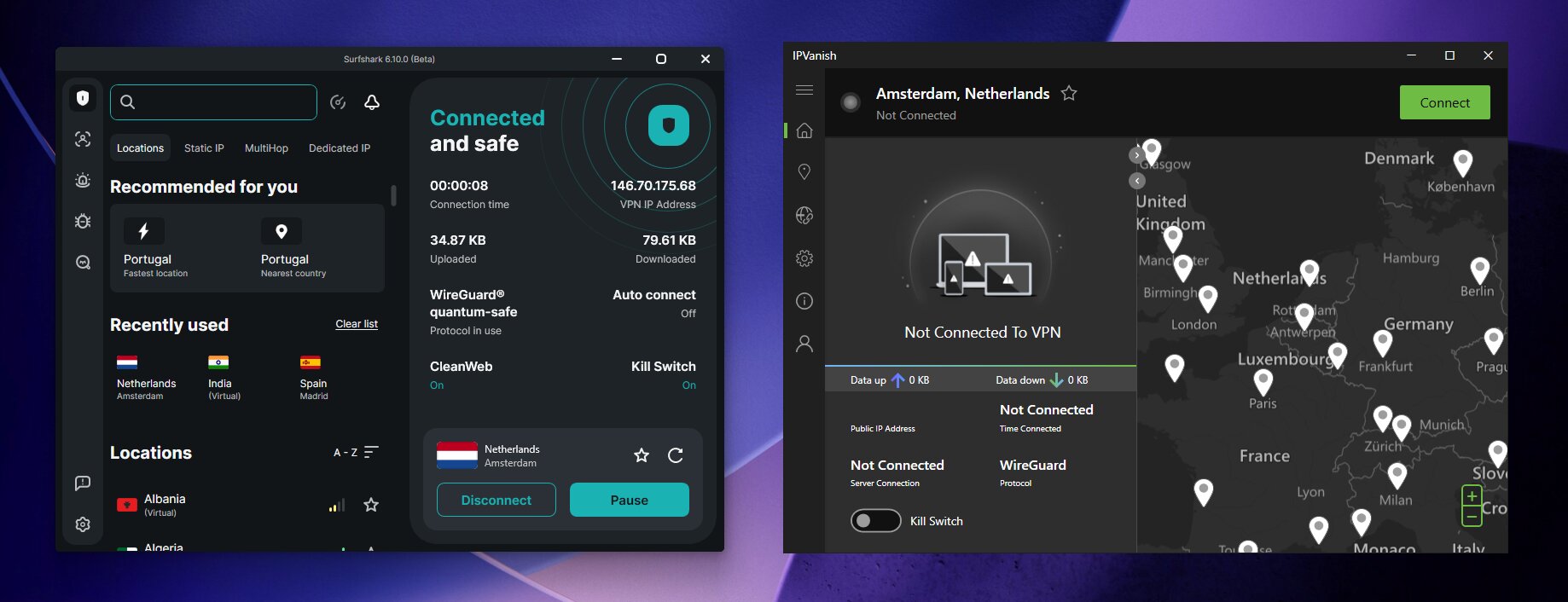
In my testing, Surfshark consistently retains around 95% of my base download speed. IPVanish comes in close at approximately 92%, which is still excellent. On local servers, you’ll barely notice a difference with either. The gap widens on long-distance connections. When I tested US and Asia-Pacific servers, Surfshark maintained far more consistent speeds. IPVanish dropped more noticeably on distant servers — in some tests from other reviewers, Singapore servers on IPVanish practically flatlined.
For everyday use — streaming HD or 4K, gaming on nearby servers, or downloading — both VPNs are more than fast enough. But if you regularly connect to servers far from your location, Surfshark is the safer bet.
| Server Location | Surfshark (WireGuard) | IPVanish (WireGuard) |
|---|---|---|
| Local / nearby | ~95% speed retention | ~93% speed retention |
| US server | Strong, minimal drop | Good, slight drop |
| UK server | Excellent | Excellent |
| Asia-Pacific server | Consistent, manageable drop | More significant drop |
Winner: Surfshark. Faster and more consistent, especially on long-distance connections.
Streaming: Surfshark Is More Reliable
Both VPNs work for streaming, but reliability is where they diverge. In my testing, Surfshark unblocks every major platform I threw at it — usually on the first server attempt. Netflix US, UK, Canada, Japan, South Korea, Brazil, and a dozen more regional libraries all worked without any server-hopping. Prime Video, Hulu, Disney+, HBO Max, BBC iPlayer, and DAZN all worked consistently.
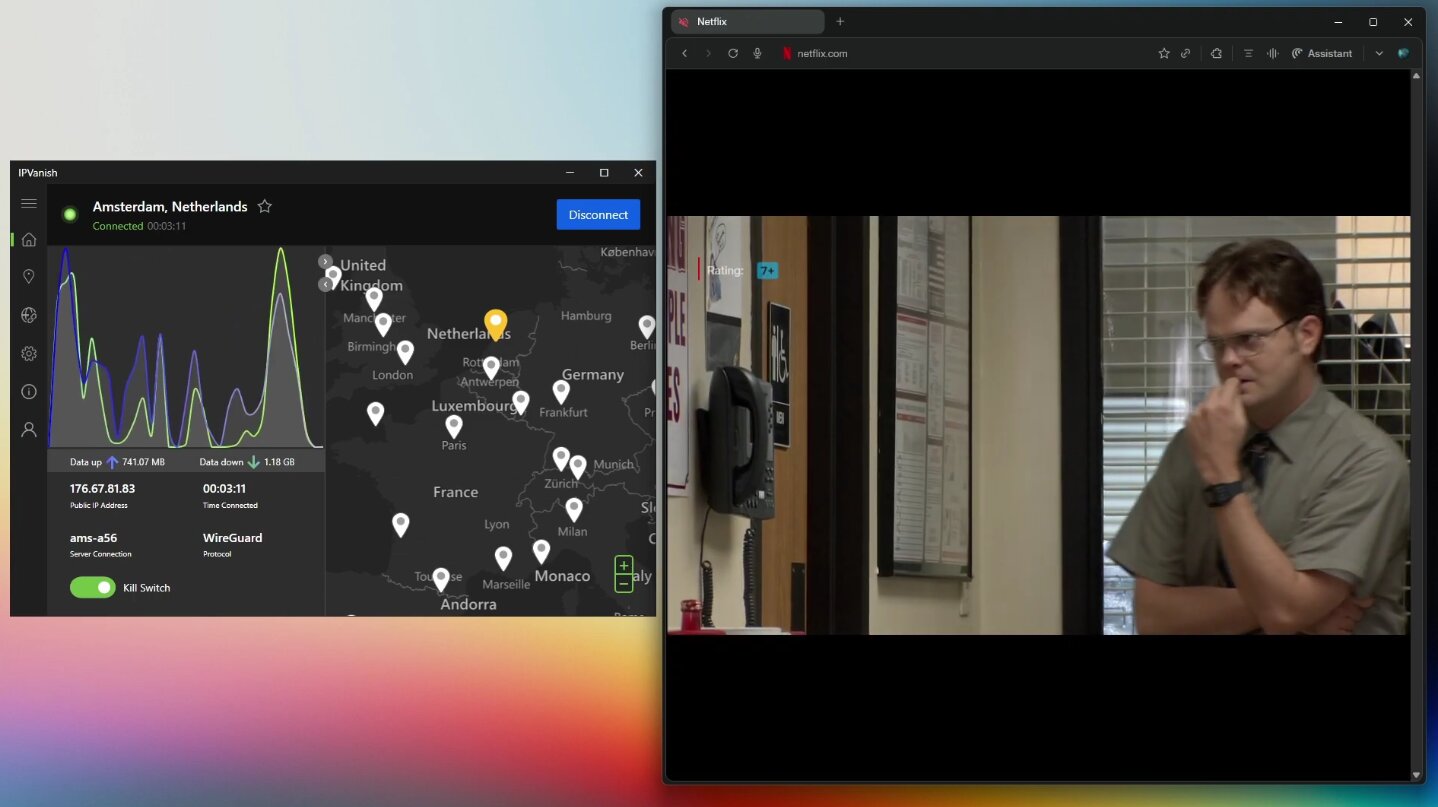
IPVanish is solid for the big US and UK platforms, but I’ve had to switch servers to get Hulu to cooperate, and Amazon Prime Video is unreliable. For users in South Korea, South Africa, or Italy, IPVanish sometimes falls back to Netflix Originals only rather than the full licensed regional library.
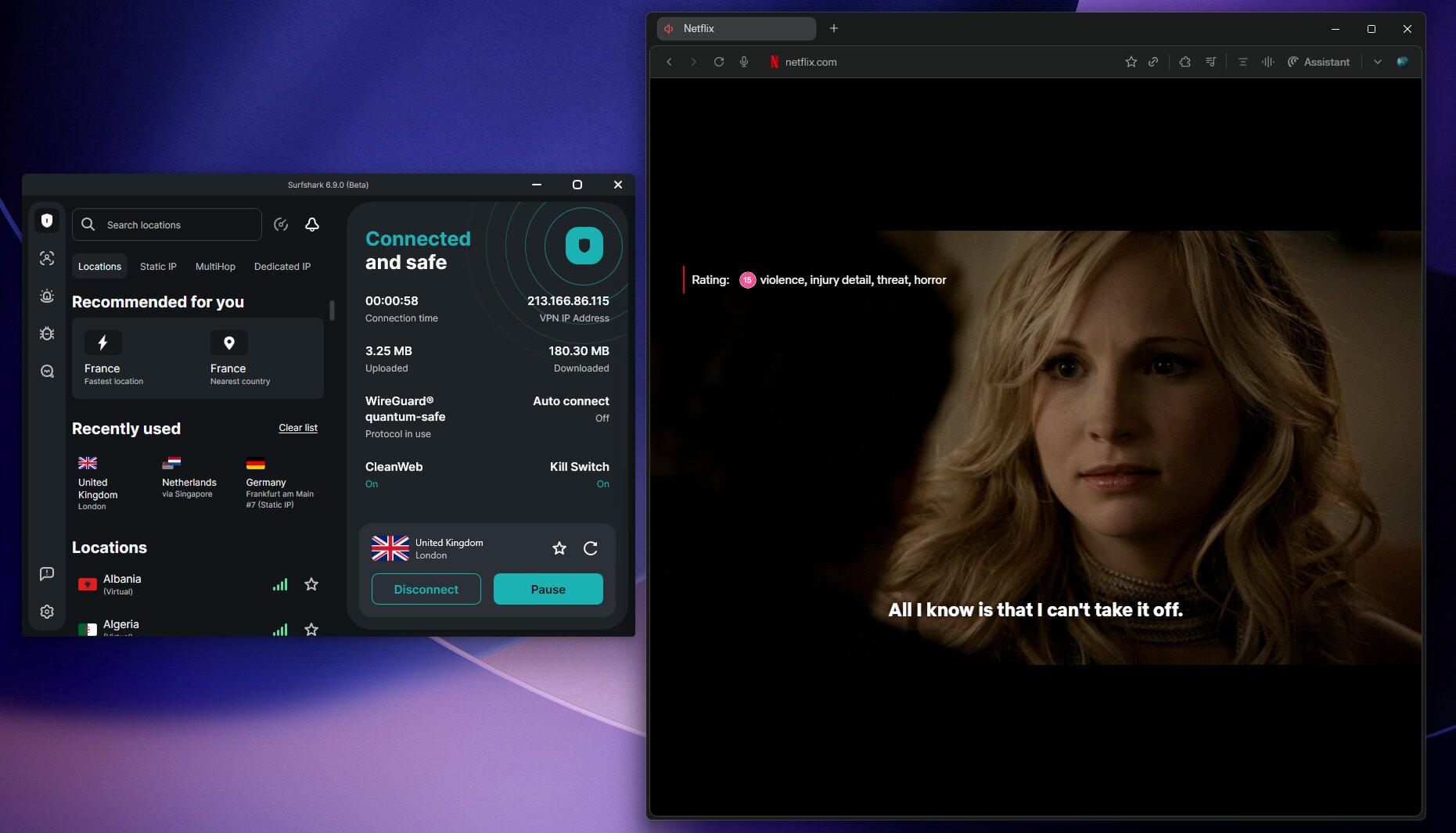
Surfshark also includes Smart DNS, which lets you stream on devices that don’t support VPN apps natively — smart TVs, gaming consoles, etc. IPVanish doesn’t have this; you’d need to configure the VPN at the router level for the same result, which is more involved.
| Streaming Service | Surfshark | IPVanish |
|---|---|---|
| Netflix US | ✅ Yes | ✅ Yes |
| Netflix international libraries | ✅ 20+ libraries, reliable | ⚠️ Works, may need server switch |
| Amazon Prime Video | ✅ Yes | ❌ Unreliable |
| Disney+ | ✅ Yes | ✅ Yes |
| Hulu | ✅ Yes, first try | ⚠️ May need server switch |
| HBO Max | ✅ Yes | ✅ Yes |
| BBC iPlayer | ✅ Yes | ✅ Yes |
| ESPN | ✅ Yes | ✅ Yes |
| DAZN | ✅ Yes | ✅ Yes |
| Smart DNS | ✅ Yes | ❌ No |
Winner: Surfshark. More reliable across more platforms, and the Smart DNS feature is a genuine bonus.
Server Network: Surfshark Has More Servers
Surfshark runs 4,500+ servers across 100 countries. IPVanish has 3,200+ servers in 113 countries. It’s an interesting split — IPVanish covers more countries, but Surfshark has more servers overall. In practice, more servers means less congestion and more consistent speeds. The country count difference matters mainly if you need an IP in a very specific, less-covered location.
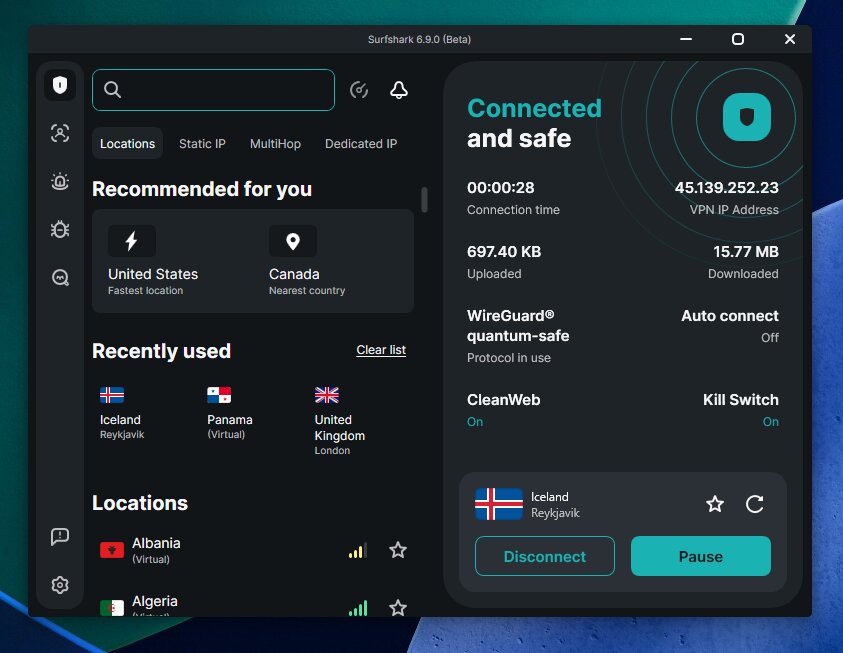
Surfshark also pulls ahead with specialty server options: Static IP servers, fully customizable MultiHop (route through two servers for double encryption), and Dedicated IP (available as a paid add-on). IPVanish offers none of these specialty categories.
Winner: Surfshark. Bigger network, less congestion risk, and unique specialty server options.
Security: Surfshark Has More Advanced Features
Both VPNs use industry-standard AES-256-GCM encryption, offer a kill switch, DNS/IP leak protection, split tunneling, and support WireGuard, OpenVPN, and IKEv2. On the fundamentals, they’re neck and neck — and in my leak tests with both, I found zero DNS, IPv4, IPv6, or WebRTC leaks on either.
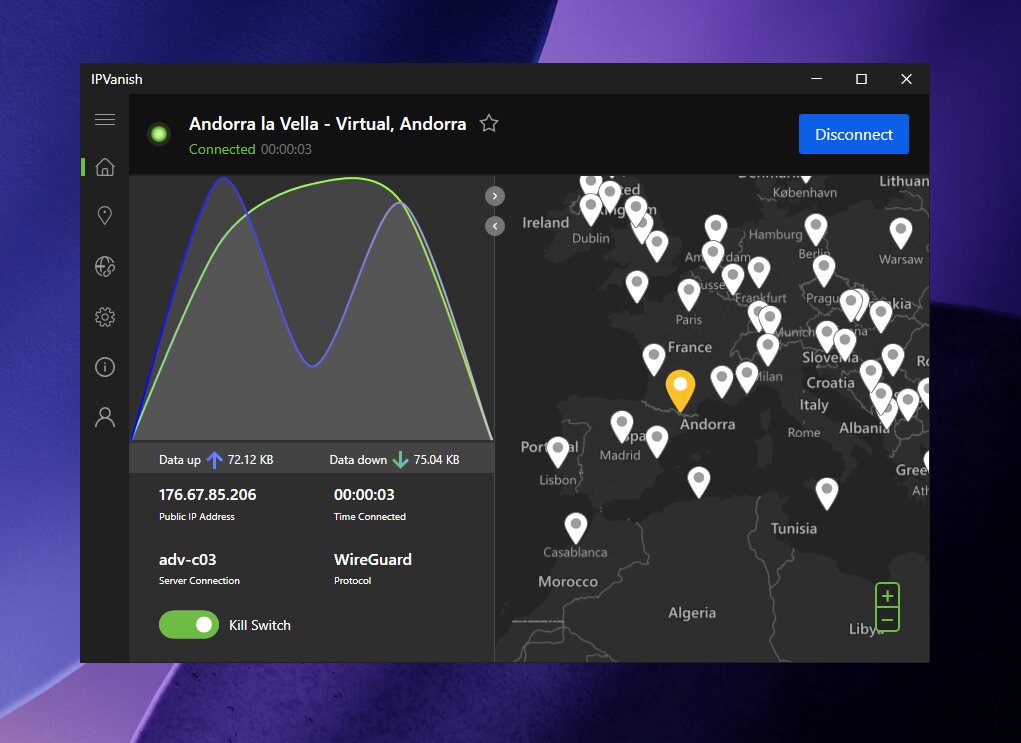
Where Surfshark separates itself:
- RAM-only servers — all of Surfshark’s servers store zero data on disk. Every reboot wipes the slate clean. IPVanish does not use RAM-only servers, which is a meaningful difference for the security-conscious.
- MultiHop (Double VPN) — route your traffic through two servers for additional encryption. Surfshark lets you customize entry and exit nodes. IPVanish has no equivalent.
- IP Rotator — changes your IP address periodically within the same server location without dropping your connection.
- GPS Spoofing (Android) — matches your device GPS coordinates to your VPN server location. Both providers offer this on Android.
- NoBorders Mode — automatically detects restrictive network environments and routes you through servers that can bypass them. IPVanish lacks this.
- Camouflage Mode (obfuscation) — activated automatically with OpenVPN; makes your VPN traffic look like normal HTTPS. IPVanish has the Scramble feature for OpenVPN which achieves a similar result.
| Security Feature | Surfshark | IPVanish |
|---|---|---|
| Encryption | AES-256-GCM | AES-256-GCM |
| Protocols | WireGuard, OpenVPN, IKEv2 | WireGuard, OpenVPN, IKEv2, IPSec |
| Kill switch | Yes (soft + hard options) | Yes (system-wide) |
| DNS/IP leak protection | Yes | Yes |
| RAM-only servers | ✅ Yes | ❌ No |
| MultiHop / Double VPN | ✅ Yes, customizable | ❌ No |
| Split tunneling | Yes (Bypasser) | Yes |
| Ad / malware blocker | Yes (CleanWeb) | Yes (Threat Protection) |
| Obfuscation | Yes (Camouflage Mode) | Yes (Scramble) |
| IP Rotator | ✅ Yes | ❌ No |
| GPS Spoofing (Android) | ✅ Yes | ✅ Yes |
| Dedicated IP | ✅ Yes (paid add-on) | ❌ No |
Winner: Surfshark. More advanced security tools, RAM-only servers, and a more flexible kill switch.
Privacy: Surfshark Has the Cleaner Record
This is one of the most important categories for me, and it’s where the history of these two providers diverges most sharply.
Surfshark is headquartered in the Netherlands — a 9-Eyes country, which isn’t ideal, but the Netherlands has no mandatory data retention laws and is subject to GDPR. Surfshark’s no-logs policy has been independently audited by Deloitte in 2023, one of the most credible auditors in the industry. The company publishes a warrant canary, and accepts cryptocurrency payments for an additional layer of anonymity. Its entire server fleet runs on RAM-only infrastructure.
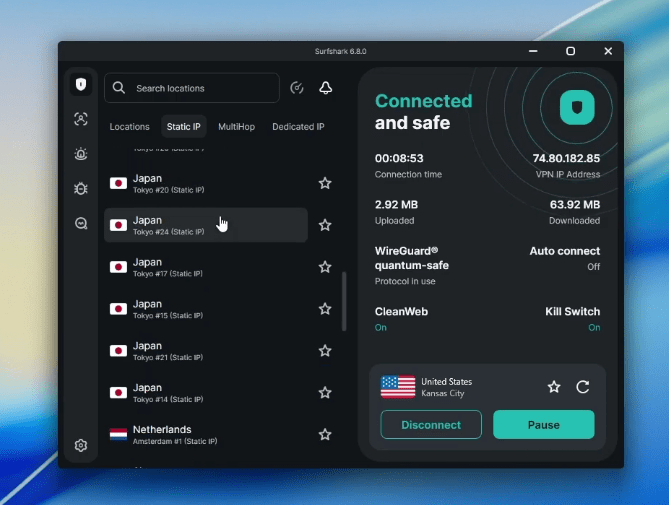
IPVanish is based in the USA — a founding member of the 5-Eyes Alliance, and arguably the least privacy-friendly jurisdiction for a VPN. More importantly, in 2016, IPVanish handed over user data to US Homeland Security despite claiming a strict no-logs policy at the time. This occurred under previous ownership, and IPVanish is now owned by Ziff Davis. Its no-logs policy was independently audited by Leviathan Security Group in 2022, confirming current compliance. IPVanish does not accept crypto payments, and its servers are not RAM-only.
Both providers use RAM-only… correction: Surfshark uses RAM-only servers. IPVanish does not. That’s a meaningful structural difference. For users who treat privacy as non-negotiable, Surfshark is the clear choice here.
Winner: Surfshark. Cleaner history, RAM-only servers, crypto payments, and a more recent independent audit.
Pricing: Surfshark Is Cheaper Long-Term
On short-term plans, IPVanish is cheaper — its monthly plan undercuts Surfshark’s. But most VPN users subscribe for at least a year, and on the long-term plans, Surfshark wins decisively.
| Plan | Surfshark (Starter) | IPVanish (Essential) |
|---|---|---|
| 1-month | $15.45/mo | $12.99/mo |
| 1-year | $3.19/mo | $3.33/mo |
| 2-year (best value) | $1.99/mo + 3 months free | $2.19/mo + 3 months free |
| Money-back | 30 days | 30 days |
| Free trial (mobile) | 7 days | 7 days |
Surfshark also offers the Surfshark One ($2.49/mo on 2-year) and Surfshark One+ ($4.19/mo) plans that bundle in antivirus, identity protection, data breach alerts, and data removal. IPVanish’s Advanced plan ($3.29/mo) adds cloud storage, a secure browser, and file sync — useful for productivity users.
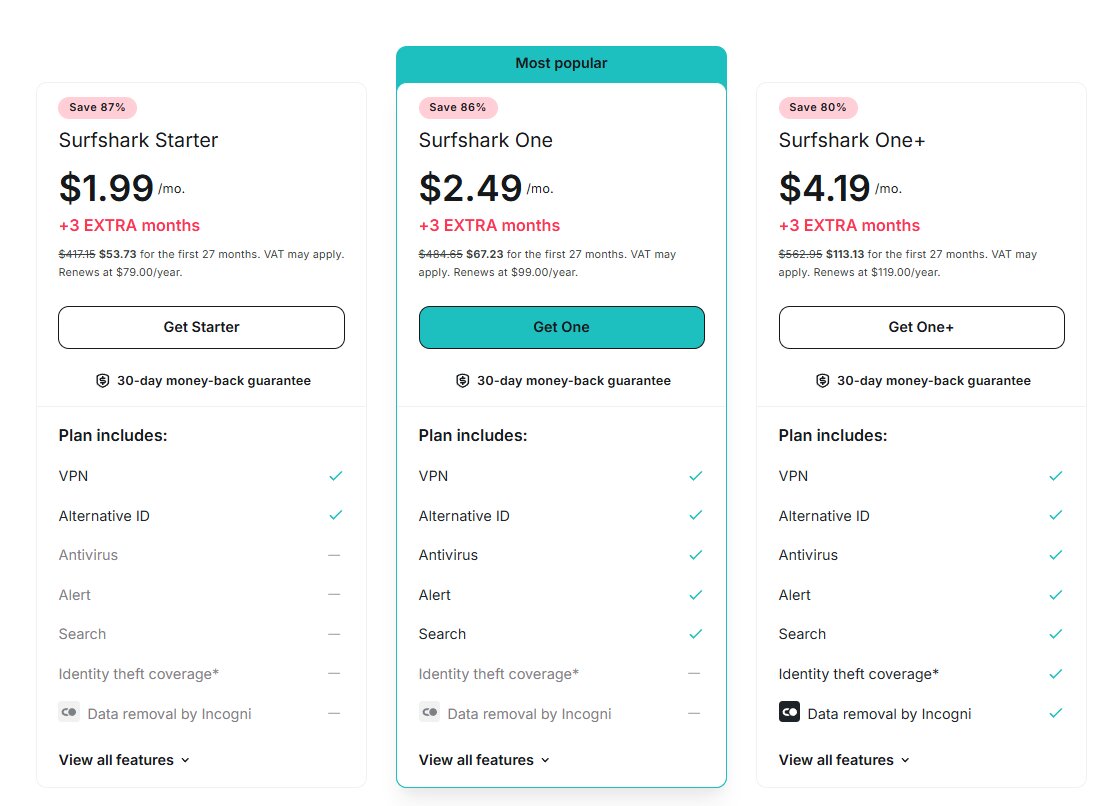
For pure VPN value, Surfshark’s Starter plan at $1.99/mo is the best deal in this comparison. For anyone wanting a full cybersecurity suite, Surfshark One is worth a serious look.
Winner: Surfshark on long-term plans. IPVanish is cheaper month-to-month.
Torrenting: Both Are Good, Surfshark Gets the Edge
Both Surfshark and IPVanish allow P2P on all their servers, which is exactly what you want. No hunting for specific P2P-designated servers — any server works. Both have split tunneling, a kill switch, and WireGuard for fast transfers.
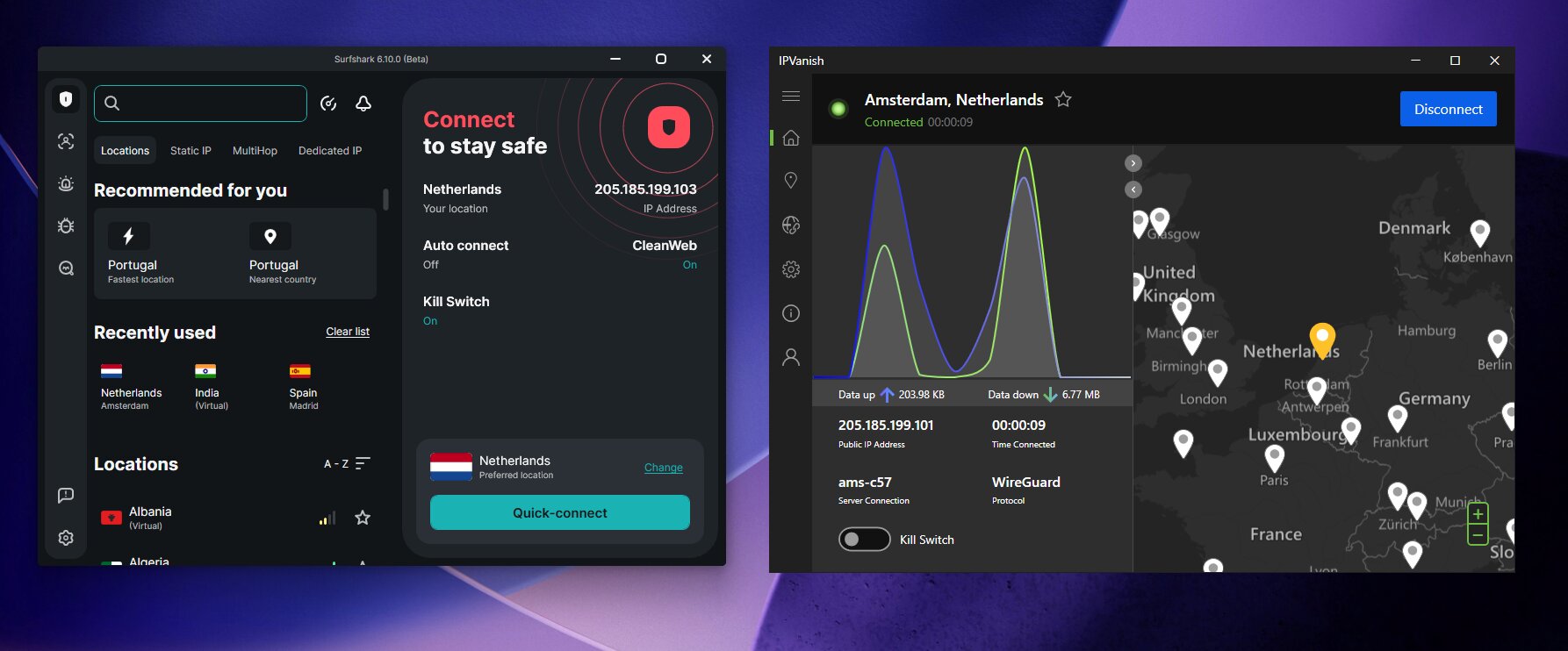
IPVanish does offer a free SOCKS5 proxy, which Surfshark doesn’t include. This can be a bonus for torrent clients that support it directly. However, Surfshark’s speed advantage and its spotless privacy history give it the overall edge here. If you’re torrenting, you want a VPN with a verifiably clean record — and Surfshark’s RAM-only server infrastructure means there’s nothing to seize even if someone tried.
Winner: Surfshark (slightly). IPVanish’s SOCKS5 proxy is a nice extra if you need it.
Gaming: It’s a Draw on Nearby Servers
For gaming, you need ping under 100ms for competitive play. On local and regional servers, both Surfshark and IPVanish deliver excellent ping — typically under 10ms on nearby connections. WireGuard is the right protocol for both.
Over long-distance servers (cross-continental), both VPNs exceed 100ms, as expected from the physics of the internet. Neither is going to give you lag-free gaming in Tokyo if you’re in New York. For competitive online gaming, always use a server geographically close to your game server.
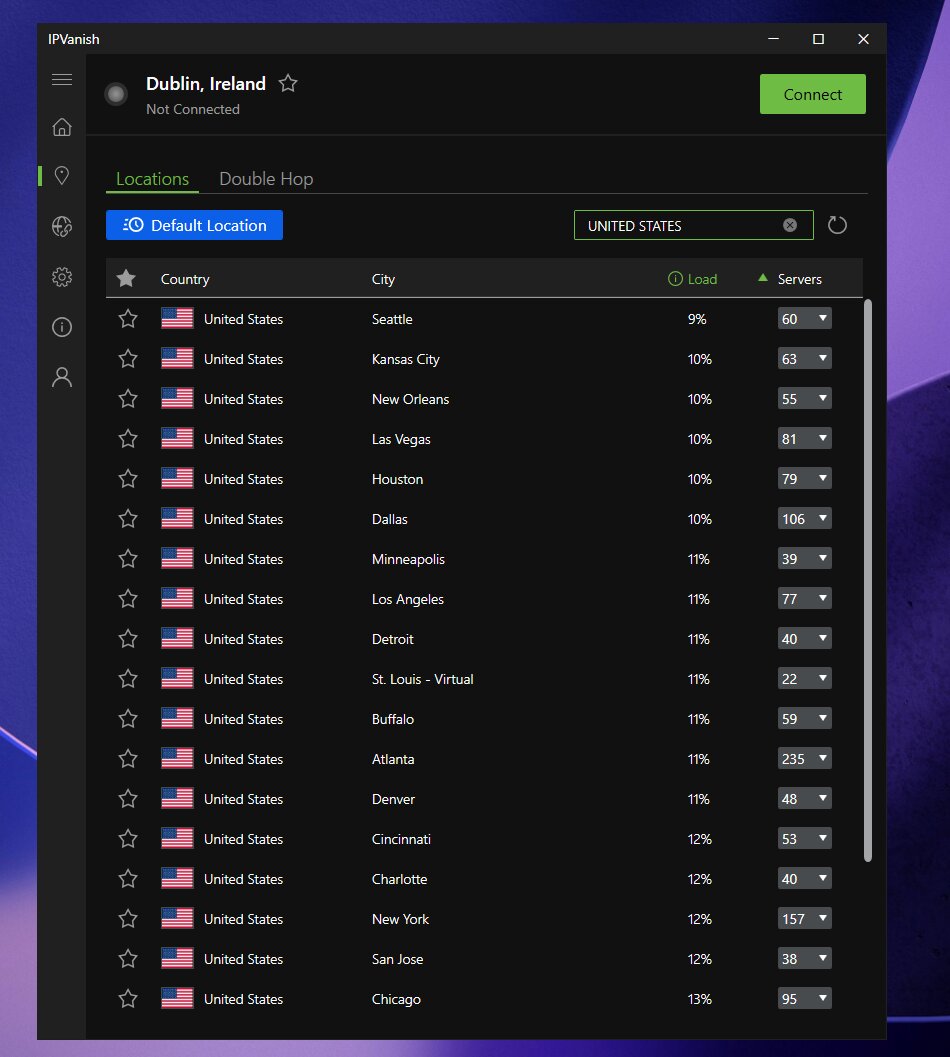
Winner: Draw. Both are excellent for gaming on nearby servers.
Ease of Use: Both Are Beginner-Friendly
I’ve installed and used both VPNs across Windows, macOS, Android, and iOS. Both are genuinely easy to use — I’d recommend either to a first-time VPN user without hesitation.
Surfshark’s interface is clean and modern. The Quick Connect feature finds the best server automatically, and advanced features like MultiHop and CleanWeb are clearly labeled. I appreciate that Surfshark’s Windows and macOS apps are near-identical in feature set. The app supports 13 languages. Browser extensions are available for Chrome, Firefox, and Edge — a nice bonus for browser-only protection.
IPVanish’s app is functional and well-organized, with a map view for server selection that I actually find useful. Its mobile app in particular is sleek and modern — arguably better than the desktop app, which feels slightly dated. The Link Checker feature in the mobile app (scan a URL for threats before clicking) is a genuinely useful extra. IPVanish offers no browser extensions, which limits its flexibility.
Both VPNs offer apps for Windows, macOS, Linux, Android, iOS, Android TV, Fire TV, and Apple TV. Surfshark adds a dedicated Linux GUI app (rare) and browser extensions. IPVanish offers phone support as a differentiator on its Advanced plan.
Winner: Slight edge to Surfshark for the more modern desktop UI and browser extensions. IPVanish’s mobile app is excellent though.
Customer Support: Draw (IPVanish Has Phone Support)
Both providers offer 24/7 live chat (starting with a bot before connecting to an agent), email support, and detailed knowledge bases. Response times from both are fast — I’ve typically connected to a live agent within a minute on either.
Where IPVanish has a genuine edge: phone support, available on its Advanced plan for users in the US, UK, Mexico, Spain, Australia, and Brazil. Most VPNs don’t offer this at all. If you prefer to troubleshoot by phone, IPVanish is the better choice.
Surfshark counters with a more thorough knowledge base and what it calls Surfschool — video guides and explainers for new users.
Winner: Draw. IPVanish has phone support; Surfshark has better self-serve resources.
Does Either Work in China?
Surfshark has a stronger reputation for working in China thanks to NoBorders Mode and Camouflage Mode — features specifically designed to bypass deep packet inspection. That said, no VPN can guarantee reliability inside China due to the constantly evolving Great Firewall.
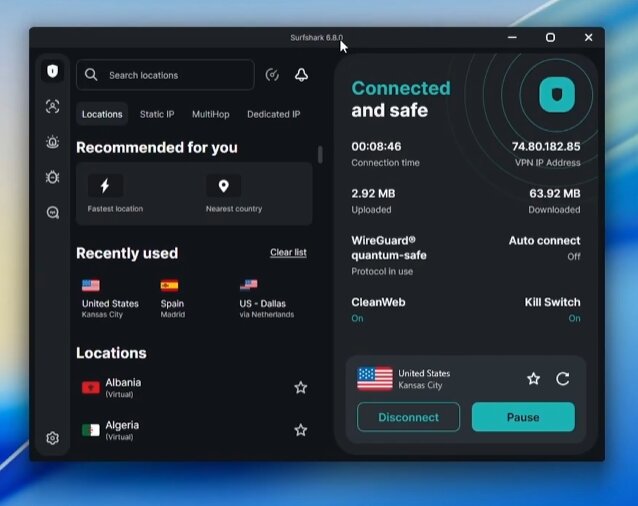
IPVanish doesn’t officially support use in China and lacks the advanced obfuscation infrastructure Surfshark has.
If China is a use case for you, Surfshark is the better bet — but I’d recommend checking current user reports before traveling, as the situation changes.
Winner: Surfshark (with the caveat that neither is a guaranteed solution).
Surfshark vs IPVanish: Pros and Cons
Surfshark — What I Liked
- Fastest speeds in my tests (~95% retention)
- RAM-only servers — nothing stored on disk
- Audited by Deloitte (2023) — most credible no-logs audit
- Reliably unlocks 20+ Netflix libraries, Prime Video, Hulu
- MultiHop with customizable server paths
- CleanWeb ad/malware blocker is genuinely effective
- Smart DNS for streaming on smart TVs and consoles
- Crypto payment option for extra anonymity
- Better long-term value at $1.99/mo on 2-year plan
- Browser extensions for Chrome, Firefox, Edge
Surfshark — What I Didn’t Like
- Based in Netherlands (9-Eyes country)
- Monthly plan is more expensive than IPVanish
- Server load / ping not shown by default in UI
- Antivirus only included in higher-tier plans
IPVanish — What I Liked
- Fast speeds (~92% retention) — genuinely competitive
- All servers support P2P + free SOCKS5 proxy for torrenting
- Phone support available (Advanced plan)
- Cheaper monthly plan vs Surfshark
- Link Checker in mobile app is a smart extra feature
- Well-organized app interface; great mobile experience
- Independent no-logs audit (Leviathan, 2022)
IPVanish — What I Didn’t Like
- Based in the USA (5-Eyes) — worst jurisdiction for a VPN
- 2016 data-sharing incident with Homeland Security (different ownership, but worth knowing)
- No RAM-only servers
- No MultiHop / Double VPN
- No browser extensions
- Amazon Prime Video unblocking is inconsistent
- Slower on distant servers compared to Surfshark
- Desktop app looks dated
Who Should Choose Each VPN?
Choose Surfshark if you:
- Want the fastest and most consistent speeds, especially on distant servers
- Stream regularly across multiple platforms (especially Prime Video and international Netflix)
- Prioritize privacy and want RAM-only servers + the best audit credentials
- Want MultiHop, GPS spoofing, or obfuscation features
- Plan to subscribe for 1–2 years (best long-term price)
- Want browser extensions alongside the desktop app
- May travel to or through China
Choose IPVanish if you:
- Only need a month-to-month subscription (cheaper short-term)
- Want phone support (Advanced plan)
- Use a torrent client that benefits from a SOCKS5 proxy
- Primarily use US/UK streaming services and don’t need Prime Video
- Want a capable VPN without a lot of extra features to navigate
My Verdict: Surfshark Wins
After testing both VPNs thoroughly, Surfshark is the better choice for most people in 2026. It’s faster, more reliable for streaming, has stronger privacy credentials, a larger server network, and — on the plans most users actually buy — it’s cheaper. The RAM-only server infrastructure and Deloitte-audited no-logs policy give me genuine confidence in its privacy claims.
IPVanish is not a bad VPN. It’s fast, it works, and if you need phone support or only need a short-term subscription, it has its place. But when you compare the two side by side across what matters most, Surfshark wins convincingly.
Both come with a 30-day money-back guarantee, so you can test either risk-free. My recommendation is to start with Surfshark’s 2-year One plan — the best balance of price, performance, and security features available right now.
For a deeper look at each VPN individually, check out my full Surfshark review and IPVanish review. If you want the best deal on either, I keep current coupon codes on the Surfshark coupon page and the IPVanish coupon page.
Frequently Asked Questions
Is Surfshark better than IPVanish in 2026?
Yes, in my testing Surfshark outperforms IPVanish across most categories — speed, streaming reliability, privacy credentials, server network size, and long-term pricing. IPVanish is still a capable VPN, but Surfshark is the stronger all-around choice for most users.
Is Surfshark faster than IPVanish?
Yes. In my tests, Surfshark retains around 95% of base speeds compared to approximately 92% for IPVanish. Both are fast on local servers, but Surfshark maintains more consistent performance on distant connections, such as US or Asia-Pacific servers. WireGuard is the recommended protocol for both.
Is IPVanish safe to use despite the 2016 controversy?
The 2016 incident — in which IPVanish handed user data to Homeland Security — happened under completely different ownership. IPVanish is now owned by Ziff Davis and had its no-logs policy independently audited by Leviathan Security Group in 2022. That audit found no violations. That said, IPVanish is still based in the US (5-Eyes), which remains an unfavorable jurisdiction for a privacy tool. I use it and consider it trustworthy today, but the history is worth knowing.
Can both VPNs unblock Netflix?
Yes, both unblock Netflix, but Surfshark is more reliable. I’ve successfully used Surfshark to access 20+ regional Netflix libraries without needing to switch servers. IPVanish works well for the main US and UK libraries but can be inconsistent for less common regional catalogs, sometimes requiring server switching.
Which VPN is better for torrenting — Surfshark or IPVanish?
Both support P2P on all servers and include a kill switch. IPVanish has a free SOCKS5 proxy which some torrent clients support directly. Surfshark edges ahead overall due to faster speeds, RAM-only servers, and a cleaner privacy record — but both are solid choices for torrenting.
Do Surfshark and IPVanish both offer unlimited device connections?
Yes — both allow unlimited simultaneous connections on a single subscription. This is one of the reasons I recommend both over competitors that cap you at 5–10 devices. It’s especially useful for families or anyone with many devices to protect.
Which is better for gaming — Surfshark or IPVanish?
Both perform equally well for gaming on nearby servers, typically under 10ms ping. On distant servers both exceed 100ms, which is expected. For competitive gaming, always connect to a server close to your game server regardless of which VPN you use. I call gaming a draw between the two.
Is the Surfshark One plan worth it over the Starter plan?
If you only need a VPN, the Starter plan at $1.99/mo is excellent value. But if you want antivirus, identity protection, and data breach alerts bundled in, Surfshark One at $2.49/mo is a great deal compared to buying those tools separately. I personally use the One plan.
Does IPVanish work with Amazon Prime Video?
In my testing, IPVanish is inconsistent with Amazon Prime Video — it works sometimes but not reliably across all regional libraries. Surfshark unblocks Prime Video reliably. If Prime Video is important to you, Surfshark is the safer choice.
Which VPN has the better privacy policy — Surfshark or IPVanish?
Surfshark has the stronger overall privacy posture: RAM-only servers, a Deloitte-audited no-logs policy (2023), a warrant canary, cryptocurrency payment support, and headquarters in the Netherlands (subject to GDPR with no mandatory data retention). IPVanish is based in the US (5-Eyes), does not use RAM-only servers, and its last audit is from 2022. Both are no-logs VPNs, but Surfshark’s setup gives me greater confidence.
87% OFF
Surfshark One — Editor’s Choice
The best all-around VPN deal in 2026 — fast speeds, unlimited devices, antivirus included, and the lowest long-term price.
Unlimited Devices
RAM-Only Servers
20+ Netflix Libraries
Deloitte Audited
Read next: